
From rusting steel to Africa’s largest wood pellet factory
After more than five years of involvement with the Coega Biomass Centre, a wood pellet factory in South Africa, CEO Emiel Hanekamp is handing over the reins. In this interview, Mr. Hanekamp explains how, during this period, the factory was transformed from a rusting factory into an impactful facility with 70 employees.
When did you first hear about this pellet factory?
During a meeting at RVO, the Netherlands Enterprise Agency, someone asked who would like to lead a mission to South Africa in the field of biomass and waste, under the Partners in Business (PIB) program. I immediately raised my hand, and so did someone else. That turned out to be Werner Euler, a South African national living in the Netherlands. That is how we met and started working together for the first time. Werner had already visited the pellet factory and thought there was potential to breathe new life into it.
What did the factory look like when you first visited it?
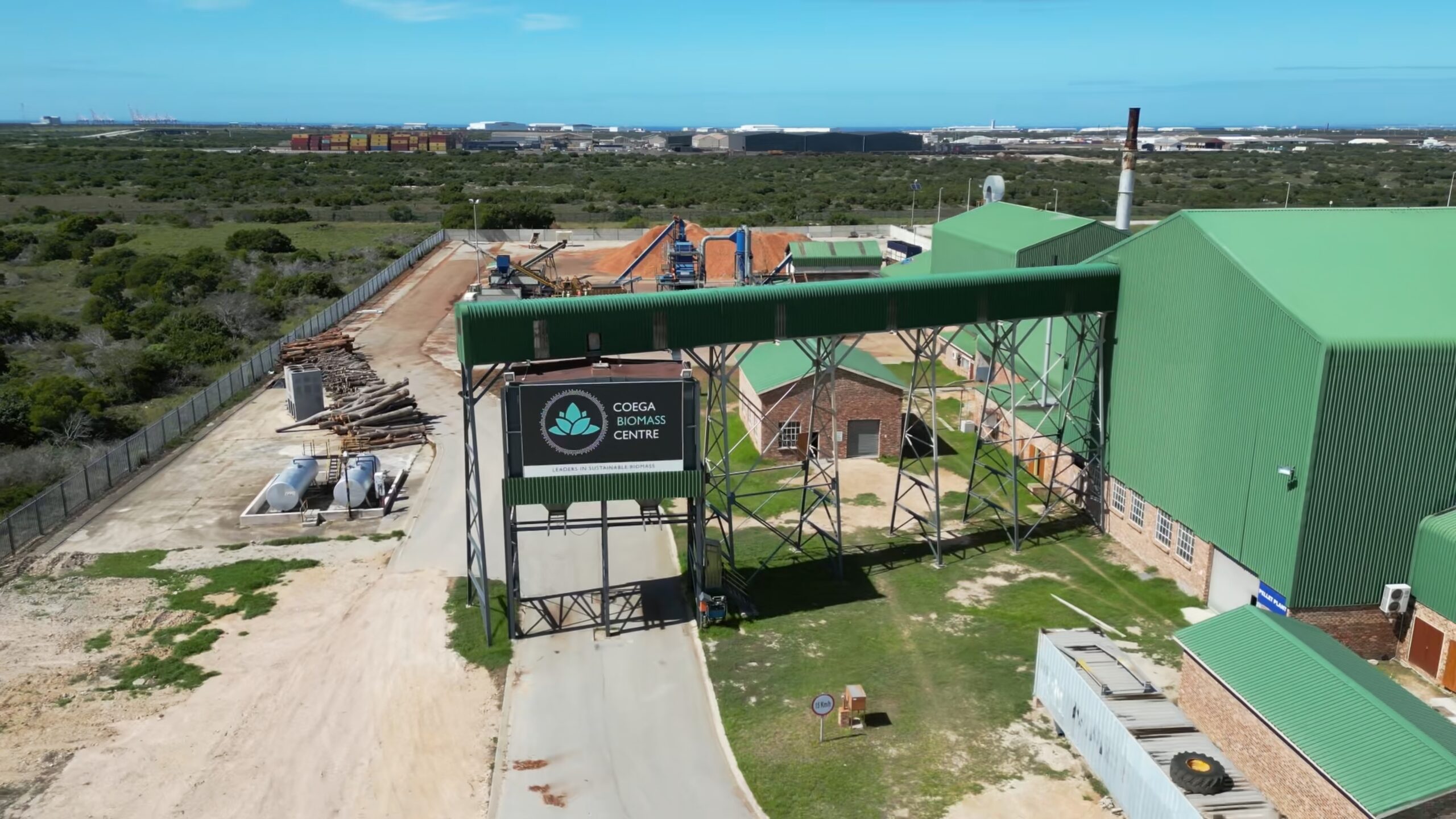
I walked in there for the first time in November 2019. It was an old factory that hadn’t been used for ten years. Grass was growing through the asphalt, and there was rust everywhere. The Coega Biomass Center was built in 2011 and had only been in use for a year. Six employees had stayed on to ensure that the facility did not deteriorate too much. It turned out to be an advantage that most of the machines had only been in operation for a year and were still working.
Why did you want to refurbish a wood pellet factory?
In principle, it wasn’t about the factory at all: it was about generating sustainable energy by utilizing invasive tree species. The factory is the means to that end, not the goal itself. The goal was to have an impact on nature restoration in South Africa by removing invasive trees and producing wood pellets that can be used as a substitute for charcoal. This is the largest wood pellet factory in Africa, with a capacity of 90,000 to 100,000 tons of pellets per year. The only other large factory is also located in South Africa and produces 30,000 tons annually.
How complex is the technology?
The production process seems simple: shred the wood, dry it, and press it into pellets. In reality, it is much more complex due to the use of different types of wood, moisture content, and hardness. It is way more than just throwing trees into a shredder. You need drum dryers, hammer mills, and pelletizing machines. In addition, there are strict international standards for the use of wood (FSC) and properties such as size, strength, ash content, and chemical composition of pellets. What makes it difficult is that we use all kinds of tree species together, while many other pellet manufacturers use cultivated trees of the same species. Beforehand, we thought: how difficult can it be? Sometimes it’s better not to know everything in advance, otherwise you will never get started. We embarked on this venture with a healthy dose of overconfidence.

What does the factory look like now?
When we started, there were six people and a dilapidated factory. Now there are 70 direct employees and another 80 to 100 people clearing invasive trees in the field. The factory is up and running, and we will produce approximately 75,000 tons in 2026. We can scale that up even further later on.
Are there enough invasive trees available?
Yes, that was the first thing we investigated when we started making plans to restart the Coega Biomass Centre. There are an estimated 60 million tons of invasive species in the Eastern Cape. The government wants to get rid of them because these species use far too much groundwater and have a negative impact on the ecosystem. Some of them are difficult to reach, but more are growing every year. So supply is not a problem.
How do you feel about saying goodbye?
After six years, it is time. My role was to set things up, not to lead. We have achieved milestones and accomplished something great, even though it took longer than expected. I can hand over to the current management with confidence and move on to other projects for Partners for Innovation, because the Coega Biomass Centre has a solid foundation.
Want to
know more?
Contact us!